Alton Mobility
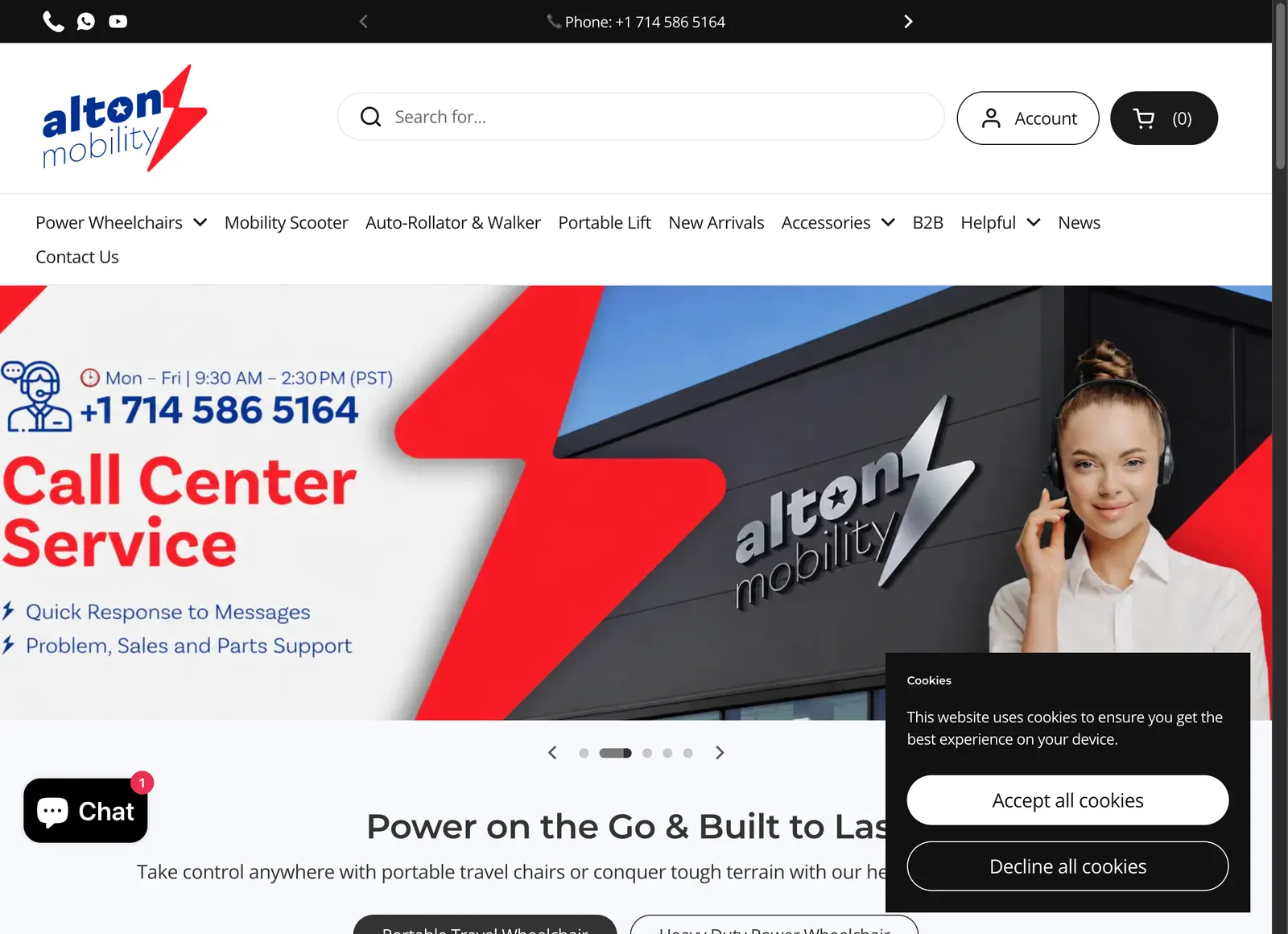
Alton Mobility sells foldable electric wheelchairs, scooters, rollators, and portable vehicle lifts, so the storefront had to make weight, fold type, range, and accessory fit obvious to shoppers who rely on those details.
The brief
Alton Mobility carries a wide range of mobility devices, from the 35 lb KANO and carbon-fiber travel chairs to the heavy-duty WOLF and the pediatric NORA, plus eleven model-specific accessory lines and portable vehicle lifts. The catalog is deeply segmented, and buyers (often caregivers and older adults) need weight capacity, fold mechanism, motor power, and accessory compatibility laid out clearly before they trust a high-ticket purchase.
- Shoppers compare chairs on capacity, weight, range, and fold type, but specs were scattered and hard to scan across ARTEMIS, WOLF, COBRA, KANO, and NORA
- Eleven accessory lines are each tied to a specific chair, so customers risk buying parts that do not fit their model
- The audience skews older and includes caregivers, demanding large readable type, clear contrast, and a low-friction checkout for chairs that cost thousands
What I built
Gencer built Alton Mobility a fully custom Shopify theme around the realities of selling mobility hardware. Product templates surface the specs that matter (weight capacity, unit weight, fold method, motor wattage, range) in consistent, scannable spec blocks, and the category architecture separates power wheelchairs, scooters, rollators, and portable lifts cleanly. Model-matched accessory navigation ties each part line back to its chair, and the whole storefront is tuned for accessibility and a reassuring high-ticket checkout.
- Custom Liquid product pages with structured spec blocks (capacity, weight, fold type, motor, range) so the WOLF, KANO, and ARTEMIS PRO are easy to compare at a glance
- Model-aware navigation linking the eleven accessory lines (Artemis, Cobra, Wolf, Kano, Nora and more) to their parent chairs to prevent wrong-fit orders
- Accessibility-first front end with generous type sizing, strong contrast, and keyboard-friendly menus for an older, caregiver-heavy audience
- A trust-forward checkout flow that foregrounds the money-back guarantee, free shipping, 1-year warranty, and flexible payment for thousand-dollar devices
FAQ
Why does a mobility-device store need a custom Shopify theme instead of a stock one?
Power wheelchairs sell on specs and fit. A custom theme lets capacity, unit weight, fold type, motor wattage, and range appear in consistent spec blocks across every model, and links each accessory line to its parent chair, which stock themes do not handle cleanly.
How does the build help customers buy the right accessories?
Alton Mobility runs eleven model-specific accessory lines (Artemis, Cobra, Wolf, Kano, Nora and others). The navigation and product relationships were structured so each accessory ties back to the chair it fits, reducing wrong-fit orders and support calls.
What was done for accessibility given the older audience?
The front end uses large readable type, high color contrast, and keyboard-navigable menus, with clean semantic markup. That suits older adults and caregivers and supports better Core Web Vitals and search visibility at the same time.